I am working on a new set of stories that are based on my summers at sea. Stories based on my fishing, canoeing, crabbing, and sailing adventures. One thing I have not tried yet is writing about provisioning boats. After today, I may have a new idea.
It's a truism that boats are either under repair or in need of it. As I sail from port to port, however, there is another piece of the sailing puzzle that gets little attention: getting food. My lockers are full of canned things: tuna, chicken, pork. Dried things: soup, mango, salami. Highly processed things: instant noodles, ritz crackers, pickles. What I and every other sailor craves is fresh food.
We obsess about it. Swap notes with strangers on the dock about that woman in Cortez who bakes scones on Thursdays (and you better get there early if you want some.) When I asked an Olympic gold medalist who has won regattas all over the world about a particular small marina, his first words were "Sometimes the bait shop has ice cream!" It's almost like we turn into toddlers at sea.
I fish. I pick oysters. Gather blackberries and wild grapes. I've even pickled kelp. But today I got to try something new in the foraging department. I went prawning.
Catching prawns takes a lot of equipment that I don't have, as I am allergic to prawns. You need traps, bait, 400-foot leaded lines, and an expensive electrical winch that can raise and lower the traps in 300+ foot waters. You need a prawn license from the state, which only allows prawning a few days each year. You wear waterproof pants, brown rubber boots, orange gloves, and of course a life vest in case you tumble in. The couple who invited me to join them had all the gear.
We roared out of the harbor in their 40 foot motorboat, and followed depth lines on an electronic chart until we found a likely prawning area: a place where the sea floor was over 300 feet down, adjoining an underwater cliff that rose toward the surface. That indicated prawns could more or less hit the wall and gather in one place.
We hooked up the traps, baited them with stinky fish oil sticks, and lowered them with weighted lines that are kept neatly coiled in a plastic barrel. Then we waited, the engine just a gentle purring background noise much like a cat.
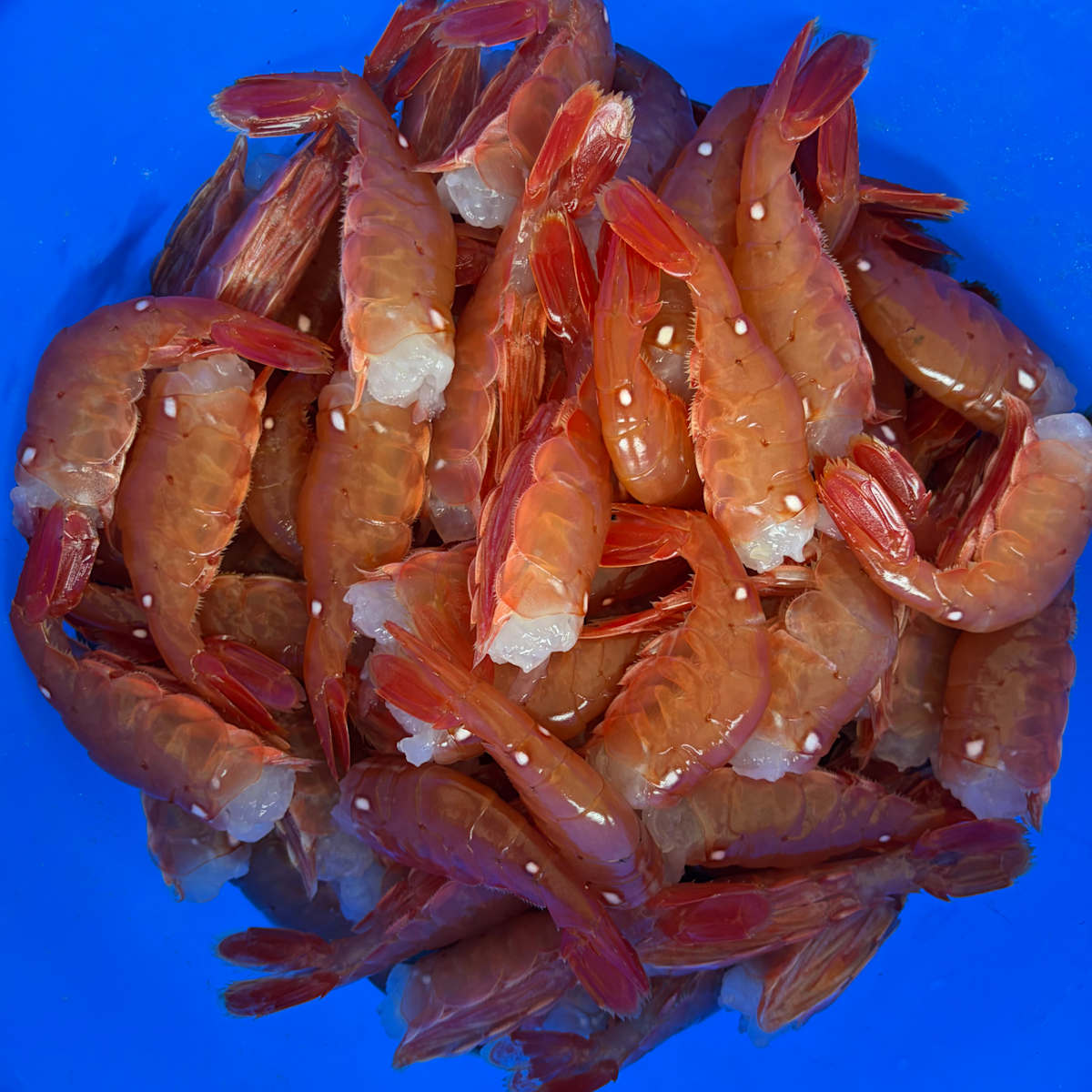
Prawns have a great sense of smell, and are fast swimmers. That's what I was told. They find the traps quickly. When we pulled the traps up, there were 106 prawns in one, 37 in another.
Prawns are very pretty. These were coral-pink, five to seven inches long, and had multiple waving legs and long antennae. It almost seemed a pity to behead them. My host, code-name Robespierre, did most of that. I, Madame DeFarge, counted them to make sure we stayed under our limit.
I hope my day with the prawns spurs more story ideas or at least that sense of joyful wonder I experienced while trying something completely new. Lucky children! They get this feeling much more often.